How anesthesia works in dogs and cats, step by step to waking up
General anesthesia is a sequence: premedication, induction, a breathing tube, gas, local blocks and recovery. Knowing the order makes the day at the clinic far less mysterious.
Updated
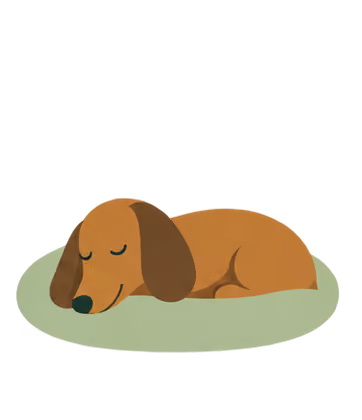
A dog trembling in the kennel after its premed is usually lying quietly on the prep table twenty minutes later, a bandage around the front leg where the catheter went in. Between those two moments general anesthesia has already started, because it is built from stages and the first one works before anything that looks like anesthesia has begun.
Each stage uses a drug or technique chosen for one task, and the combination lets the team use less of each drug than any single one would need. The term for this is balanced anesthesia, and it is the main reason modern anesthetics are smoother than the ones older owners remember.
Premedication: the calm before the procedure
The first injection, usually given into a muscle or under the skin, is the premedication or “premed”. It typically pairs a sedative with an opioid pain reliever. Common sedatives include acepromazine and the alpha-2 agonists such as dexmedetomidine; common opioids include methadone, hydromorphone and butorphanol, though the exact choice depends on the patient, the procedure and what a given country allows.
The premed does several jobs at once. It calms the animal, which matters for welfare and for safety, because a stressed patient has a racing heart and more adrenaline in its blood. It starts pain relief before the first incision, which makes pain after surgery easier to control. And it reduces the amount of induction drug and anesthetic gas needed later.
While the premed takes effect, the team usually places an intravenous catheter. Through it go the induction drug, fluids, antibiotics if needed, and any emergency drug.
A patient without a catheter is a patient the team cannot reach quickly.
Induction: from awake to asleep
Induction is the moment the patient goes from sedated to unconscious. In most dogs and cats it is done with an injectable drug given slowly through the catheter, commonly propofol or alfaxalone, sometimes combined with ketamine or a benzodiazepine such as midazolam. The dose is given to effect, which means the anesthetist gives part of it, watches, and adds more only if needed.
A smooth anesthetic is several small jobs done one after another, each by the drug best suited to it.
Before induction many teams give the patient oxygen through a mask for a few minutes. This is called preoxygenation, and it fills the lungs with an oxygen reserve that buys time if placing the breathing tube takes longer than expected.
Induction by mask or chamber with gas alone, once common, is now used much less, especially in cats. It is slower, stressful for the animal, and exposes staff to more waste gas.
Intubation: protecting the airway
Once the patient is unconscious, a soft plastic tube is passed through the mouth into the windpipe. A small cuff near the tip is inflated to seal it. This is the single most important safety step of general anesthesia.
The tube keeps the airway open, delivers oxygen and gas straight to the lungs, and stops saliva, blood or regurgitated stomach contents from running into them. It also lets the team breathe for the patient with a bag or a ventilator if breathing slows.
Cats need a gentle hand here. Their larynx can spasm shut when touched, so many teams spray it with a local anesthetic and wait a moment before passing the tube. The feline windpipe is also easily damaged by an overinflated cuff, and careful teams check cuff pressure rather than guessing it.
Maintenance: anesthetic gas and oxygen
Once the tube is in, the patient is connected to an anesthetic machine. The machine mixes oxygen with an inhalant anesthetic, almost always isoflurane or sevoflurane, through a device called a vaporizer, and delivers it through a breathing circuit. The anesthetist turns the vaporizer up or down to deepen or lighten anesthesia, and the effect follows within minutes because the gas is taken up and cleared through the lungs.
Sevoflurane works a little faster on the way in and out; isoflurane is cheaper and has been used for decades. Both are good drugs, and the difference matters far less to the outcome than the monitoring around them. Some procedures use an infusion of injectable drugs instead of, or alongside, gas, an approach known as total or partial intravenous anesthesia.
Gas anesthetics on their own lower blood pressure and breathing in a dose-related way. That is one reason pain relief and local blocks are worth so much: the less the patient feels, the less gas it needs. Tracking those effects minute by minute is the work of anesthesia monitoring in dogs and cats.
Local and regional blocks
Local anesthetics such as lidocaine and bupivacaine stop nerves from carrying pain signals. Injected near the right nerve, they numb an area completely for hours, which means the brain receives far fewer pain signals during surgery and the patient wakes up more comfortable.
Common examples include dental nerve blocks before tooth extractions, an injection into the testicle or the spermatic cord during castration, a line of local anesthetic along an incision, and an epidural for surgery on the hind legs or tail. Ultrasound-guided blocks for limb surgery are now offered in many specialist hospitals.
Blocks are cheap, quick and underused. If a dog is having teeth removed, it is reasonable to ask whether nerve blocks are part of the plan; in most clinics the answer will be yes. Blocks are one layer of a wider plan for pain management that runs from the premed to the days at home.
Recovery: switching off the gas
When the procedure ends, the vaporizer is turned off and the patient breathes oxygen while the gas washes out of its lungs. The tube is removed once the swallowing reflex returns. In flat-faced breeds such as Bulldogs and Pugs it stays in longer, until the dog is clearly awake and can hold its own airway open.
Recovery is when a lot of problems actually show up. Body temperature has usually dropped, breathing can be shallow, pain can surface as the drugs wear off, and some animals wake up disoriented or distressed. Good clinics keep monitoring through this phase, warm the patient actively, score pain at intervals and give more pain relief when the score calls for it. Some sedatives can be partly reversed to speed up waking.
Most dogs and cats are awake enough to lift their heads within minutes and to stand within an hour or two, though they may stay drowsy for the rest of the day. Once the pet is home, the hours after anesthesia bring their own, mostly harmless, after-effects.
Sedation versus general anesthesia
Sedation stops at the premed stage or a little beyond it. The patient is calm and drowsy but still controls its own airway and can be roused. It suits x-rays, ear examinations, small wound cleans and grooming of a matted, painful coat.
It does not suit anything painful, anything long, or anything in the mouth. Dental cleaning below the gumline needs a breathing tube to keep water and debris out of the lungs, and the AAHA Dental Care Guidelines describe anesthesia-free dental cleaning as not recommended for that reason.
Between the two, the clearer choice for any procedure that hurts is general anesthesia with a tube, a catheter and someone watching. Heavy sedation used to avoid it saves very little and gives up the airway.
The one step owners can influence most is the morning before the premed: how long food was withheld (the fasting guidelines set out the usual ranges), whether water was offered, and which tablets went down with breakfast.
Frequently asked questions
Does my pet feel anything during anesthesia?
Under general anesthesia the patient is unconscious and does not feel or remember the procedure. The team checks depth throughout, using reflexes, jaw tone, eye position and the response of heart rate and blood pressure to stimulation. Pain relief is given alongside the anesthetic so that the body's response to surgery is blunted too, which also makes waking up more comfortable.
Read about anesthesia monitoringWhy was my dog's leg shaved?
A small square of fur is clipped over a vein, usually on a front leg, so that an intravenous catheter can be placed cleanly. The catheter gives the team a direct route for induction drugs, fluids and emergency medication. Some patients also have a patch clipped on the neck or a back leg for blood samples or a blood pressure cuff.
Why is my dog coughing a little after anesthesia?
A mild, soft cough for a day or two is common after a breathing tube has been in place, because the tube can irritate the windpipe. It should get better, not worse. A cough that is getting stronger, labored breathing, or a dog that seems unwell and off its food deserves a call to the clinic the same day.
Read about the first hours after anesthesiaWhy does my pet stay at the clinic all day for a short procedure?
The procedure itself is often the shortest part of the day. Patients are usually admitted in the morning, examined, given the premed and then left to let it take effect, and the surgery list is ordered by urgency and type. Afterwards the team wants to see the pet warm, awake, able to stand and often eating or passing urine before it goes home. A late afternoon collection time is normal and usually a good sign.
Sources and further reading
Explore the original publications behind this guide.
Keep reading
Monitoring every vital sign
ECG, pulse oximetry, CO2, blood pressure and temperature, the depth signs no machine shows, and what the paper record catches.
Managing pain
Pre-emptive and multimodal pain relief, nerve blocks, the main drug classes without doses, and four questions to ask at discharge.
The hours after anesthesia
How long grogginess, a croaky bark and wobbly back legs usually last, and the table that separates them from a real problem.