Everyday care for dogs and cats: checkups, teeth, weight and vaccines
Most of what keeps a pet safe on the day of a procedure happens months before it, in ordinary checkups and habits at home. These guides cover the routine side of pet health.
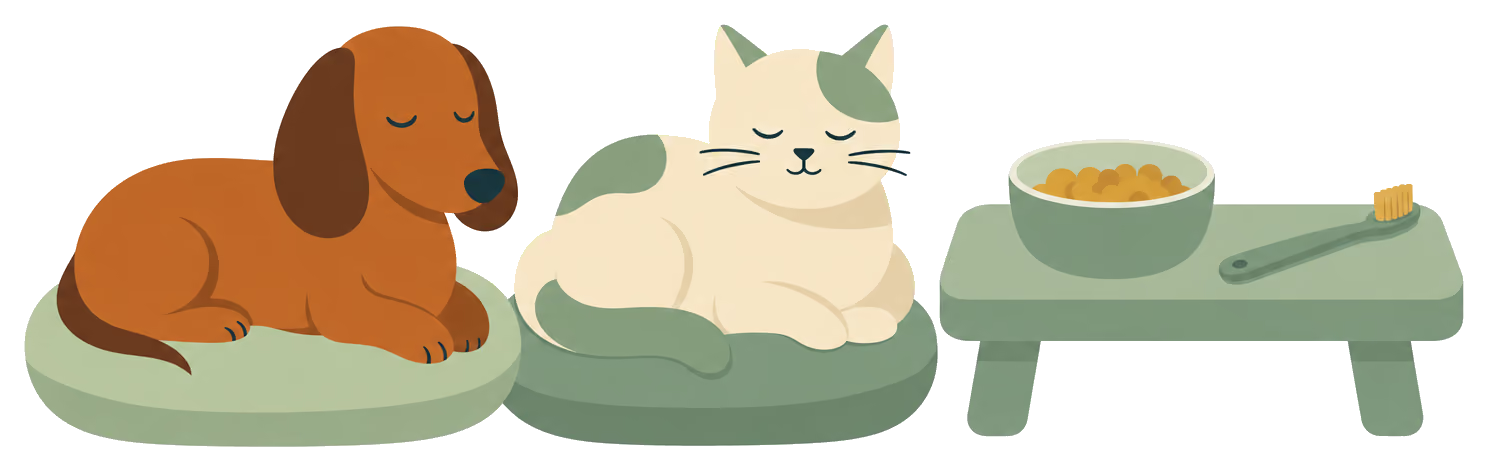
Small habits, steady health.
Four guides to the routine care that shapes how well a pet copes with the rare big day.

A healthier mouth
Why probing, X-rays and scaling below the gumline need a sleeping patient, and which chews and brushes earn their place.
Making sense of vaccines
Which shots every dog and cat needs, why puppies and kittens get a series, and when a titer can stand in for a booster.
Finding a healthy weight
The 9-point scale vets use, how to score your own pet in a minute, and a safe pace for losing weight.
Growing older, feeling good
When a Great Dane or a Chihuahua counts as senior, what twice-yearly checks look for, and a home set up for stiff joints.
Routine care catches the slow problems while they are still small. A dog booked in on a Tuesday for a nail trim and a booster can leave with a slightly loose tooth on file, two extra pounds since spring and a heart rhythm the vet wants to listen to again in six months. None of it is urgent. All of it matters, and most of it would have stayed invisible at home.
Those visits also build a written picture of one animal’s normal: its weight, its blood values, how it reacted to its last vaccine. When the day comes that a pet needs anesthesia for a procedure, that picture is what the veterinary team works from.
What routine care looks like over a lifetime
Puppies and kittens see the clinic most often. The first months bring a series of vaccines, deworming, a first look at the teeth and the joints, advice on food and growth, and usually a conversation about spaying or neutering. Owners tend to remember this stage as a blur of appointments, and that is roughly accurate.
Healthy adults settle into a steadier rhythm, usually one full examination a year. The vet goes over the animal nose to tail: eyes, ears, mouth, heart and lungs, skin, lymph nodes, belly, joints and weight. Vaccines are updated on the schedule the clinic has set for that pet’s life and risks, parasite control is reviewed, and any change the owner has noticed gets talked through.
From middle age onward many clinics recommend checks twice a year, often with blood and urine tests. Kidney disease, an overactive thyroid in cats, arthritis, dental disease and heart murmurs become more common, and an animal changes faster in a year at twelve than it did at five. What changes at this stage, and why age alone does not rule out a procedure, is the subject of caring for senior pets.
The four things that come up at almost every visit
Parasite control is the least glamorous and the most repetitive part of pet care. Fleas, ticks, intestinal worms and, in many parts of the US, heartworm are all handled with regular preventives, and the right product depends on species, region and lifestyle. A product meant for dogs can be dangerous to cats, so the label and the clinic’s advice both deserve attention.
Teeth come next, and they are easy to underestimate. Dental disease is one of the most common problems vets find in adult dogs and cats, and much of it sits below the gumline where no owner can see it. That hidden part is why a proper dental cleaning happens under anesthesia.
Weight is the third. An extra pound sounds trivial until you remember that on a small cat it can be a sixth of the healthy body weight. Scoring a pet’s body condition at home takes about a minute and needs only your hands.
Vaccines are the fourth, and they are less of a fixed menu than many owners assume. Core vaccines protect against diseases that are widespread or severe, while lifestyle vaccines depend on where a pet lives and what it does. The split for dogs and cats, and how boosters and titers fit in, is laid out in vaccines for dogs and cats.
How everyday health shapes anesthesia safety
When a pet needs anesthesia, the team assigns it a risk category using the ASA physical status classification, which grades patients from healthy to severely ill. A fit, lean dog with clean bloodwork sits at the low-risk end. The same dog carrying a lot of extra weight, with untreated dental infection and a heart murmur nobody has investigated, does not.
Each of those problems changes the plan. Obesity makes breathing under anesthesia harder and drug amounts trickier to judge, dental infection adds bacteria and pain to the picture, and a murmur may call for heart imaging before the procedure. The pre-anesthetic check exists to find these things, but it works best when routine visits have already found most of them, months earlier and without any time pressure.
There is a practical side to this as well, and it is one owners rarely think about until the day of surgery: a pet that has been handled calmly at regular visits, weighed on the same scale, and has had blood drawn before, usually arrives less frightened, and a calmer animal tends to need less sedation to settle.
Keeping a simple health record
Clinics keep their own files, but a short record at home is still worth having. Pets change clinics, owners move, an emergency hospital at two in the morning has no access to the regular vet’s notes, and a half-remembered reaction to a vaccine three years ago is exactly the detail that gets lost.
A notebook works. So does a note on a phone. What matters is that it holds the facts in one place: dates of visits and what was found, vaccines and their due dates, parasite treatments, current medicines and food, weight at each weigh-in, and any reaction to a drug, vaccine or anesthetic. Weight is the entry most people skip, and it is the one that shows a slow trend best.
Some owners also photograph their pet’s gums and teeth every few months, or note the body condition score alongside the weight. Neither is required. Both make the next conversation with the vet more specific.
Where to start
If a pet has not been seen in over a year, the most useful single step is to book a routine examination and bring the record, however thin it is. Ask what the clinic would want to know before an anesthetic, even if none is planned. The answer tends to show which parts of everyday care need attention first, and whether that loose tooth from the Tuesday visit is still there.
Frequently asked questions
What if my pet is too frightened to be examined?
Tell the clinic when you book. Many now use low-stress handling, quieter appointment times, separate waiting areas for cats and towels or treats during the exam. For very anxious animals the vet may prescribe a calming medicine to give at home before the visit. Getting a cat used to its carrier, or a dog used to short practice visits, also makes later appointments easier.
Do indoor cats really need routine checkups?
Yes. Indoor cats avoid some infections and injuries, but they still develop dental disease, weight gain, kidney problems and thyroid disease. Cats are also very good at hiding illness, so a yearly examination is often the first place a slow change shows up, long before the cat looks unwell at home.
Can a new clinic get my pet's records from the old one?
Usually, yes. Clinics transfer records on request, often by email, and most need only the owner's permission and the old clinic's details. It is worth asking for the transfer a week or so before the first appointment, so the new vet can read the vaccine history, past test results and any drug reactions before the pet is on the table.
Is it worth paying for blood tests when my pet seems healthy?
A blood panel taken while a pet is well gives the clinic a personal baseline. Later results can then be compared with that pet's own normal rather than a population range, which makes small early changes easier to spot. Many clinics suggest baseline tests in middle age and before planned anesthesia.
Read about the pre-anesthetic checkSources and further reading
Explore the original publications behind this guide.
Keep reading
The pre-anesthetic check
The questions on the admission form, the heart and lung exam, which blood panel suits which pet, and what to sign.
Pet anesthesia
ASA risk classes, the CEPSAF death rates, flat-faced breeds and the reasons cats need gentler airway handling.
Surgery & recovery
The surgery day hour by hour, the ten-minute discharge talk, and the two weeks of restraint that follow it.