Recovery at home after surgery: the first days with your pet
The car ride is over, the pet is home, and the clinic's lights are off for the night. From here you run the recovery yourself, and most of it comes down to a quiet room, a schedule and a few minutes of looking.
Updated

The first evening at home is mostly about patience and a well-chosen room. A cat that walks two steps in a slightly drunken line and goes straight under the bed, or a dog that lies down by the front door and will not move, is not a sign that something has gone wrong.
If something looks wrong tonight, skip to when to call the clinic.
The sections below run in the order the days do. All of it is general information, not instructions for your pet: the discharge sheet from your clinic, and any phone advice from the team, always comes first.
The first evening
Plan on staying home that evening if you can. Your pet does not need constant handling, but it does help to have someone within earshot. The animal will usually still be feeling the drugs used for anesthesia and pain relief; grogginess, whining and wobbly legs each get their own section in what to expect after anesthesia, so this page sticks to the practical routine.
Keep the house calm. Visitors, children and the other dog can wait until tomorrow.
In a home with more than one pet, the animal that stayed behind sometimes reacts oddly to the one that comes back. The returning pet smells of the clinic, moves strangely and may be wearing a cone, and a housemate cat can hiss or even swat at it. Keeping them apart for the first evening, then letting them meet briefly under supervision the next day, usually avoids a scuffle that could pull at the wound.
A quiet space
The recovery spot should be warm, draft-free, on the floor and close enough to where you are that you can glance in. For a dog, a thick washable bed or a folded duvet in a room with a non-slip floor works well; smooth wood and tiles are hard on legs that are still unsteady. Close doors to stairs or use a baby gate. For a cat, a large crate or a bathroom with a bed, water and a low-sided litter tray is safer than the run of the house, because a sedated cat still tries to jump onto a windowsill or a wardrobe and can fall. Some cats feel safer with a towel draped over part of the crate.
Food and water after anesthesia
Follow the clinic’s timing here exactly. Many clinics suggest offering a small amount of water once the pet is home and fully awake, and a small, bland or normal meal later that evening, often a quarter to a half of a usual portion, but practice varies with the procedure and the animal. A nauseous pet that gulps a full bowl may bring it straight back up.
Plan the first two days on paper, because nobody remembers dose times after a broken night.
Put the bowls where the pet is resting, not in the usual spot across the house, and raise them slightly for a dog in a cone. A cat that has eaten nothing for more than a day or so after going home is a different case, since cats can become unwell from not eating, and the clinic should hear about it.
Toilet breaks
Dogs need to go out on a short leash, even in a fenced yard, for every toilet trip until the clinic says otherwise. The leash stops a sudden sprint after a cat or a squirrel, which is exactly the kind of movement that pulls at a fresh incision. Go slowly through doorways if the dog is wearing a cone.
For cats, a low-sided litter tray in the recovery room saves a climb, and shredded paper instead of clumping litter keeps grit away from a fresh belly wound if the clinic suggests it. Urine is the one to watch in both species: your pet should pass urine within roughly a day of coming home. If they strain without producing anything, or produce nothing at all, call the clinic.
Restricted activity and stairs
Restricted activity is the instruction owners most often find vague, and the one that matters most for the wound. For most soft-tissue surgery it means no running, jumping, rough play or stairs, and leash walks only for the toilet, usually for around ten to fourteen days. Small dogs can be carried up and down stairs with one arm under the chest and one under the hindquarters, keeping pressure off the belly. Larger dogs may need to sleep downstairs for a while; it is easier to move your sleeping bag for a few nights than to repair an opened wound. For cats, a room with no high furniture does most of the work.
After orthopedic surgery the rules are stricter and longer, and the surgeon’s written plan is the only guide that counts.
A medication schedule that works
Write it down. Pain relief, antibiotics if prescribed, and anything the pet was already taking can easily overlap, and at 6 am after a broken night it is hard to remember whether the last dose was at ten or at midnight. A simple sheet on the fridge with each medicine, the time it is due and a column to tick works better than relying on memory, and it means anyone in the household can give a dose correctly.
| Time due | Medicine (as on the label) | Given (tick and time) |
|---|---|---|
| Evening of surgery | Pain relief from the clinic | |
| Next morning | Pain relief, other prescribed medicines | |
| Next evening | Pain relief, other prescribed medicines |
Give pain relief on the schedule the clinic set, not only when the animal seems uncomfortable. Steady relief works better than catching up, for reasons set out in pain management for dogs and cats. Keep the medicine cabinet shut on this one: ibuprofen, naproxen and acetaminophen (paracetamol) from the household supply can harm dogs and can be deadly to cats, so only what the clinic sent home goes into the pet.
Checking the incision
Look at the wound twice a day, morning and evening, in good light. A little redness along the edges and slight swelling in the first days is expected. Taking a photo each time makes it much easier to see whether things are improving, and gives the clinic something to look at if you are unsure. For what normal healing looks like from one day to the next, and the choice between a cone and a recovery suit, see caring for the wound.
When to call the clinic
Some changes cannot wait until the morning. Call the clinic, or the emergency service it names, if you notice any of these:
- labored, noisy or very fast breathing at rest
- pale, white or gray gums
- bleeding from the wound that soaks through a pad or does not stop with gentle pressure
- collapse, or a pet you cannot rouse
- vomiting more than once or twice, or vomiting with blood
- no urine within about a day of coming home
Cats versus dogs at home
Cats and dogs recover differently, and owners who have only had one or the other are sometimes caught out. Dogs tend to show what they feel: they whine, pace, follow you around or lie with a fixed, tense posture. Cats tend to hide it. A cat in pain may sit hunched at the back of the crate, squint, stop grooming, and look entirely calm to anyone who does not know what to watch for. Vets score these signals with published tools such as the Feline Grimace Scale, and the page on signs of pain in dogs and cats shows how to read them at home. Dogs are usually the harder patients to keep still. Cats are usually the harder patients to read.
If a cat has been under the bed for six hours, lift the edge of the duvet once, quietly, and check that it is breathing slow and even.
Frequently asked questions
Can my pet sleep in my bed after surgery?
Usually not for the first week or two. Jumping on and off a bed puts strain on the wound, and a dog lifted up and down can twist in your arms. A bed on the floor next to yours gives the same closeness without the risk. Cats are harder to keep off furniture, which is one reason a crate or small room is often suggested for them.
My dog refuses to go out to the toilet in the cone. What can I do?
Many dogs are thrown by a cone at first because it catches on door frames and changes what they can see. Leading them out on a short leash, going slowly through doorways and staying with them often helps. Some owners find a soft cone or a recovery suit easier. If the dog still has not urinated within about a day, call the clinic.
Read about wound care and conesIs it normal for my pet to sleep most of the day?
Yes, for the first day or two. Anesthetic drugs, pain relief and the stress of the clinic all add up, and many pets sleep far more than usual. What matters is that they can be roused, recognize you, and are gradually more alert each day. A pet that is getting drowsier rather than brighter needs a call to the clinic.
Read about the first hours after anesthesiaCan I leave my pet alone the day after surgery?
Short absences are usually fine once the pet is awake, steady and settled, as long as they are in their safe recovery space with water and the cone on if one was sent home. Avoid long days out for the first day or two if you can. If nobody can be home, a friend or neighbor who knows the warning signs can drop in.
Sources and further reading
Explore the original publications behind this guide.
Keep reading
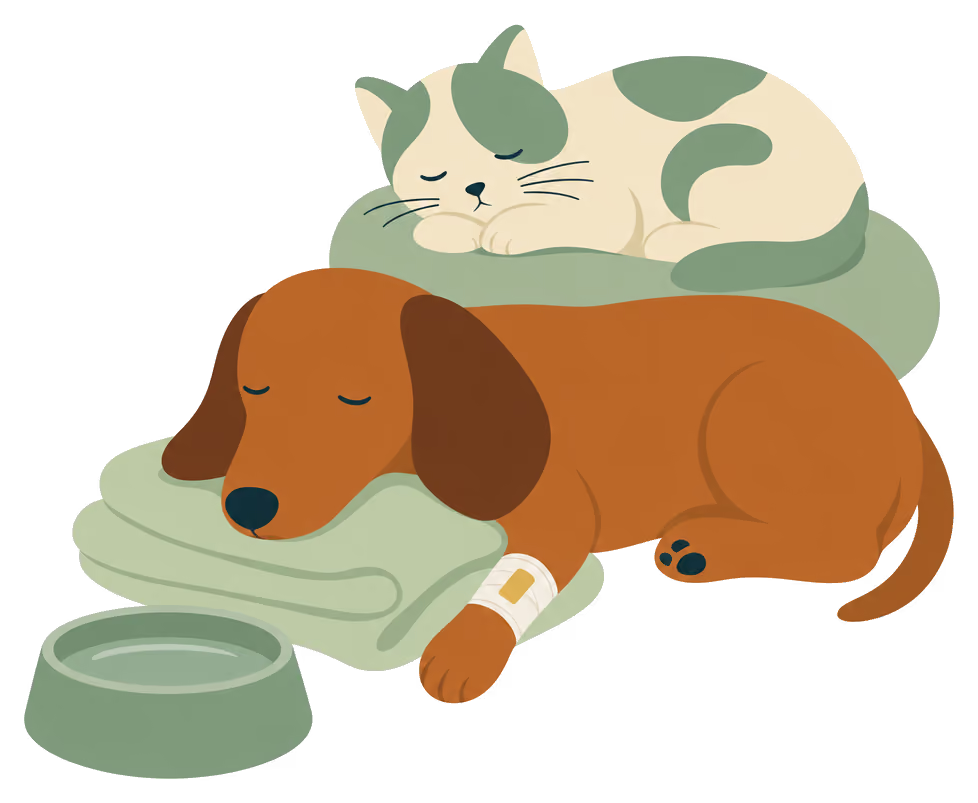
The hours after anesthesia
How long grogginess, a croaky bark and wobbly back legs usually last, and the table that separates them from a real problem.
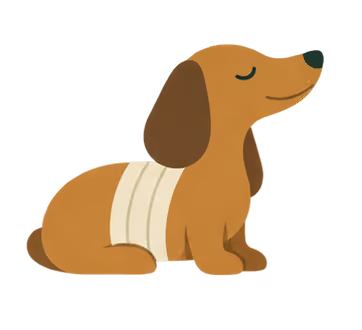
Caring for the wound
Cone or recovery suit, stitches or glue, and a daily photo habit that shows the clinic which way a wound is going.
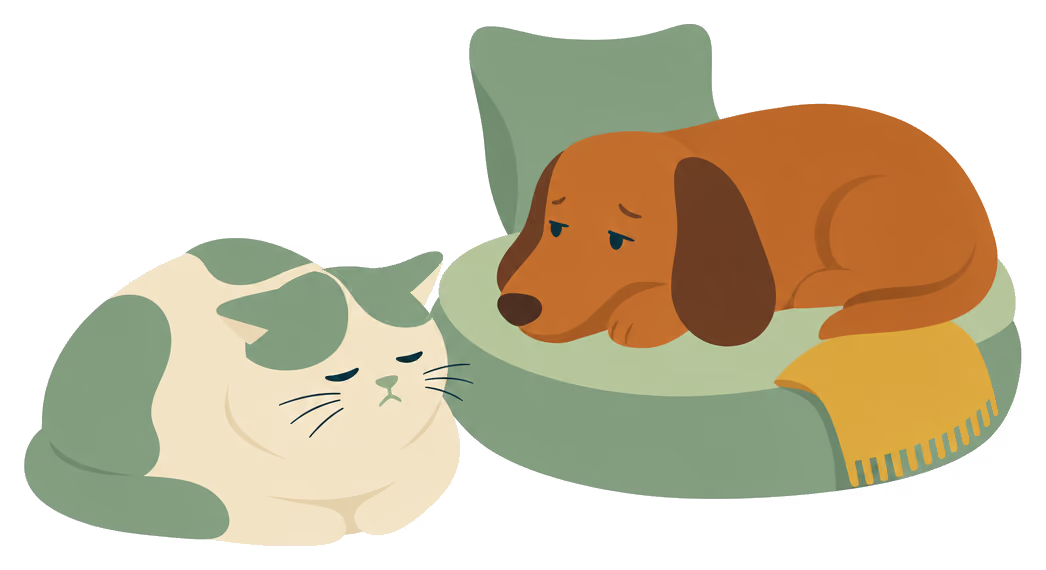
Signs of pain
Posture, face, appetite and grooming changes set side by side, the Glasgow and grimace scales, and the signs that cannot wait.