Veterinary anesthesia monitoring in dogs and cats explained for owners
Behind the beeping machine is a person with a stethoscope, a clipboard and one job: watching the patient, minute by minute, from induction until it is awake.
Updated
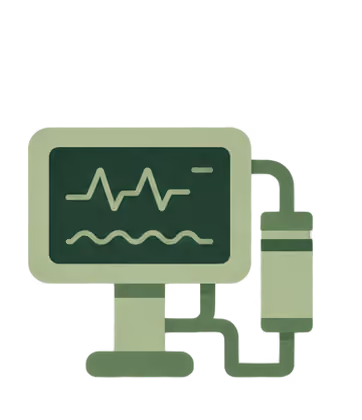
Veterinary anesthesia monitoring is a repeated glance, and it is the part of the procedure that most often decides how the day goes. With a small terrier asleep under a warm-air blanket, a clip on its tongue and a cuff around a front leg, the technician at the head of the table looks at the screen, then at the dog’s chest, then at the color of its gums, and writes a line on the record. Five minutes later she does it again.
Anesthetic drugs affect breathing, blood pressure, heart rate and body temperature. Monitoring is how the team sees those effects early, while they are still small and easy to correct. Owners never need to read the screen themselves, but knowing what each line on it stands for makes the clinic’s answers far easier to follow.
Who does the anesthesia monitoring
The person matters before the machines. The 2020 AAHA Anesthesia and Monitoring Guidelines for Dogs and Cats describe a trained team member dedicated to the patient, responsible for anesthesia monitoring from induction through recovery and recording what they find. In most general practices that is a credentialed veterinary technician or nurse; in referral hospitals it may be an anesthesia technician working with a veterinary anesthesiologist.
Dedicated means the monitoring is not a side task. A veterinarian who is operating cannot watch the capnograph at the same time, and a technician who is also fetching instruments and answering the phone will miss things. When owners ask a clinic one question about anesthesia, this is a good one: who watches my pet while the procedure is underway, and is that their only job?
Monitoring also starts before the first drug. The baseline heart rate, breathing rate, temperature and gum color taken during the pre-anesthetic check give the team something to compare against once the patient is asleep.
What the machines measure
A typical setup for a dog or cat under general anesthesia brings several readings together on one screen. Each one answers a different question, and each relates to a particular effect of the drugs described in how anesthesia works: the gas lowers blood pressure and slows breathing, some sedatives slow the heart, and almost all of them disturb temperature control.
Every number on the screen counts only because a trained person is looking at it, and at the patient, at the same time.
| Parameter | What it tells the team | Common equipment |
|---|---|---|
| Heart rate and rhythm | Whether the heart is beating at a safe speed and in a normal pattern | ECG leads, stethoscope or esophageal stethoscope |
| Oxygen saturation (SpO2) | How much of the hemoglobin in the blood is carrying oxygen | Pulse oximeter clip on the tongue, lip, ear or toe |
| End-tidal CO2 | Whether the patient is breathing enough, and whether the tube and circuit are working | Capnograph connected to the breathing tube |
| Blood pressure | Whether organs such as the kidneys and brain are getting enough blood flow | Doppler probe with a cuff, or an oscillometric cuff; arterial line in referral cases |
| Body temperature | Whether the patient is losing heat | Rectal or esophageal temperature probe |
| Breathing rate and effort | How the patient is breathing, and whether it needs help | Observation, bag movement, capnograph trace |
Heart rate and the ECG
An electrocardiogram (ECG) shows the heart’s electrical activity as a trace on the screen. It reveals irregular rhythms, which are more common under anesthesia in older patients, in animals with heart disease and in some deep-chested dogs after abdominal surgery. Many technicians also use a stethoscope or an esophageal stethoscope, a soft tube that lets them hear heart and breath sounds continuously.
The ECG shows electrical activity, not whether the heart is actually pumping blood well. That is why it is always read alongside pulse quality and blood pressure.
A note on alarms, since they worry owners who hear them through the door. Most alarms are not emergencies. Monitors beep for many reasons: a probe that has moved, a cuff that has been knocked, a threshold set conservatively. Experienced monitoring staff often silence an alarm, check the patient by hand, find the cause and carry on within seconds. A quiet room is not necessarily a safer one either. Alarms that have been switched off entirely, because they go off too often, are a known problem in human and veterinary hospitals alike, and good teams set their limits so that an alarm still means something.
Pulse oximetry
A pulse oximeter clips onto a thin, unpigmented area, usually the tongue, and measures how saturated the blood is with oxygen. In a patient breathing oxygen from the anesthetic machine, readings should be high. A falling number can mean a problem with breathing, the tube, the circuit or circulation, or simply that the clip has slipped or dried the tongue.
Capnography and CO2
A capnograph samples the gas the patient breathes out and measures its carbon dioxide. End-tidal CO2, the level at the end of each breath, shows whether the patient is breathing enough: too high suggests breathing is too shallow or slow, which anesthetic drugs commonly cause. The shape of the trace also shows whether the tube is in the right place and whether the circuit is working. Many anesthetists rank the capnograph as one of the most useful single monitors, because it reports on breathing, circulation and equipment at once.
Blood pressure
Anesthetic drugs commonly lower blood pressure, and low pressure during a procedure is one of the problems the team works hardest to prevent, because the kidneys and brain depend on steady flow. A Doppler probe placed over an artery on a leg or tail, with a cuff above it, is accurate in small patients and is widely used in cats. Oscillometric machines inflate a cuff automatically at set intervals and are convenient in medium and large dogs. Critically ill patients may get a fine catheter in an artery for beat-by-beat readings.
Temperature
Almost every anesthetized patient loses heat. The drugs reset the body’s thermostat, the patient is not moving, and the clipped and cleaned skin and open body cavities give heat away. Temperature is checked regularly, and warming starts early with forced-air blankets, warm-water pads and warmed fluids. Heating pads that are not designed for anesthetized patients can burn skin that cannot pull away. Small dogs and cats on a cold steel table can lose a surprising amount of heat during the clipping and preparation alone, before the procedure has even started, which is why careful teams put the warming in place first and shave second.
Signs no machine shows: depth of anesthesia
No monitor in a typical practice measures how deeply asleep the patient is. The anesthetist judges it by hand and eye.
Jaw tone is one sign: in a patient at a suitable depth the jaw opens with little resistance, while a jaw that clamps shut suggests the patient is too light. Eye position is another. In dogs and cats at a typical surgical depth the eyeball often rotates downward and inward; a central eye with a fixed, wide pupil can mean the patient is too deep, while a central eye with a brisk blink reflex can mean it is too light. The blink reflex itself, a gentle touch at the corner of the eye, fades as anesthesia deepens.
The patient’s response to the procedure is the last clue. A sudden rise in heart rate, blood pressure or breathing when the surgeon makes an incision means the patient is feeling it at some level and needs more pain relief or a deeper plane. Reading these signs together is a skill built over years, and it is the core of good veterinary anesthesia monitoring.
The anesthetic record
Every reading gets written down. It goes onto the anesthetic record, on paper or on screen. The record lists the drugs given and when, the fluids, the vaporizer setting, and readings taken at regular intervals, commonly every five minutes, plus any event such as a drop in blood pressure and what was done about it.
The record is not paperwork for its own sake. Writing a value down forces the person to look at it. Trends that are invisible from one reading to the next, a blood pressure creeping down over twenty minutes for example, become obvious on paper. And a record from a previous anesthetic tells the next team how this patient behaved, which is why it is worth asking for a copy when a pet changes clinic.
Monitoring through recovery
Switching off the gas is not the end of the risk. In the CEPSAF study published by Brodbelt and colleagues in 2008, a substantial share of anesthesia-related deaths in dogs and cats happened after the procedure, during recovery. Patients in recovery are still drowsy, often cold, sometimes in pain, and no longer have a breathing tube once it is removed.
Good recovery monitoring continues to check breathing, gum color, heart rate and temperature until the patient is awake, warm and able to hold its head up. Flat-faced dogs and cats, whose airways can obstruct as they wake, are watched until they are clearly breathing on their own. Pain is scored with a structured scale at intervals, and more pain relief is given when the score says so. A recovering patient also breathes anesthetic out into the room for a while, which is why ventilated recovery areas matter for the staff as well (waste anesthetic gas has the detail). Once the pet goes home, the hours after anesthesia follow a pattern of their own.
Anesthesia monitoring in dogs and cats of different sizes
Size changes what the team watches most closely. Anesthesia monitoring in dogs of giant breeds is mostly about blood pressure, positioning and breathing support, since a big dog lying on its side for a long time can struggle to ventilate fully. Anesthesia monitoring in dogs at the toy end, and in cats, puts more weight on temperature, blood sugar and fluid volume.
Cats lose heat quickly because of their size, and hypothermia slows the breakdown of anesthetic drugs and makes recovery longer and less comfortable. Some cats show the reverse problem after the procedure: certain opioids can push a cat’s temperature up during recovery, so the thermometer stays in use after the cat starts to warm. Small patients also receive fluids in small volumes, measured carefully, because overloading a cat with fluid is easier than it sounds. Pulse oximeter clips and blood pressure cuffs have to be the right size; an oversized cuff gives falsely low readings and an undersized one falsely high ones.
Cats rarely give much warning before a problem, so in cats, close and continuous observation is worth more than any single number.
Veterinary standards for monitoring
There is no single law that sets what equipment a veterinary practice must use during anesthesia, and standards differ between countries and clinics. The AAHA guidelines are a widely cited reference in North America for what good monitoring looks like, and many clinics follow them closely. Practices that are AAHA-accredited are assessed against AAHA standards, which include anesthesia.
Owners do not need to understand capnograph traces to judge a clinic. One that monitors well can usually say in a sentence or two who watches the patient, which of the readings above it records, how the patient is kept warm and who stays with it in recovery. The questions worth asking before the day are collected in the overview of dog anesthesia.
One thing is worth asking for afterwards: a copy of the anesthetic record, filed with the pet’s papers for the next clinic.
Frequently asked questions
Will the clinic call me while my pet is under anesthesia?
Usually only if something needs a decision, such as an extra tooth to extract or a second lump to remove, which is why a reachable phone number matters on the day. Most clinics call once the patient is awake and recovering, often with an estimated pickup time. If you would like a call at a particular point, ask at admission so it can be written on the patient's sheet.
What happens if a reading goes out of range during the procedure?
The monitoring person tells the veterinarian, and the team acts on the cause: lightening the anesthetic, giving fluids or a drug to support blood pressure, breathing for the patient, warming it, or checking whether the probe has simply slipped. Most changes are small and corrected within minutes, which is exactly why readings are checked continuously rather than occasionally.
Is more equipment always better?
Equipment helps only when someone is watching it and knows what to do with the numbers. A clinic with a pulse oximeter, a capnograph, a blood pressure monitor and a thermometer, and a trained person dedicated to the patient, covers what most healthy dogs and cats need. Referral hospitals add more for complex cases, such as arterial lines for continuous blood pressure.
Is anesthesia monitoring included in the price, or is it an extra?
It varies between clinics. Some include monitoring in a single anesthetic fee, while others list it as a separate line on the estimate, sometimes next to fluids and warming. When comparing quotes from two practices, it helps to ask what monitoring each one covers and who carries it out, because a lower price can mean fewer readings or no dedicated person. A clinic should be able to explain the difference in a few sentences.
Sources and further reading
Explore the original publications behind this guide.
Keep reading
How anesthesia works
What the premed, the induction drug, the tube, the vaporizer and a nerve block each do, and which step owners can influence.
The specialist's role
Residency and the DACVAA or DipECVAA letters, hospital pain services, VTS technicians, and the patients who justify a referral.
The hours after anesthesia
How long grogginess, a croaky bark and wobbly back legs usually last, and the table that separates them from a real problem.