Wound care after surgery for dogs and cats: a day-by-day home guide
A surgical wound heals best when it is left alone, kept dry and looked at every day. The looking is your job, and it is easier when you know what normal healing is supposed to look like.
Updated
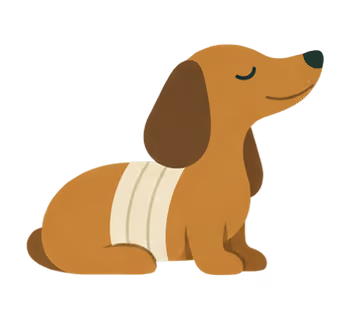
Licking is the most common thing that goes wrong with a surgical wound at home, and it nearly always happens on a day when the animal seems fine. Around day four a dog that is clearly feeling better will push her cone against the hallway wall at an angle until her tongue just reaches the edge of the stitches.
What a healthy incision looks like over the first two weeks, how to keep a pet from licking it, how stitches and glue differ, and when to call the clinic are covered below. The instructions on your discharge sheet come first.
What a healthy incision looks like over the days
On the first day the wound edges should sit neatly together. A little redness along the line, mild swelling and a small amount of clear or slightly pink fluid are all normal. Some animals, particularly after a spay or castration, develop bruising that spreads beyond the wound and looks dramatic for a few days. On its own, bruising that fades from purple through green and yellow is not usually a worry.
Over roughly days two to five the redness and swelling should settle rather than grow. The skin edges start to seal, and a thin scab may form along the line. By about a week the incision usually looks like a faint pink line with little or no swelling. Over the second week the scar pales and hair begins to grow back around it.
The direction of travel matters more than any single day. A wound that is a little red but less red than yesterday is healing. A wound that is redder, more swollen or wetter than yesterday is not.
Looking every day and what to photograph
Check twice a day, in good light, with the animal calm. Many owners find it easiest when the pet is lying on its side or back after a meal.
Take a photo each time from the same distance and angle, in daylight if possible, with the whole incision in the frame. A coin or ruler next to the wound helps show size. If you ever need to phone the clinic, these photos are often more useful than a description, and many clinics will ask you to send one. Note the day and time with each picture so the clinic can see the sequence, not just the latest snapshot.
Cones, soft cones and recovery suits
The classic plastic cone (often called an Elizabethan collar or e-collar) is still the most reliable way to stop a pet reaching a wound. It needs to extend a little past the tip of the nose to work. Most pets dislike it for a day or two and then adapt: they learn to eat and drink with it on and to move through doorways more slowly. Raising food and water bowls slightly helps.
A cone that is a nuisance for ten days costs far less than a wound reopened on day four.
Soft cones made of fabric or foam are more comfortable and quieter, and many animals sleep better in them. They can also bend enough for a determined dog to reach a wound on the flank or a hind leg. Inflatable collars that sit around the neck like a travel pillow suit some dogs, but often do not protect a belly wound in a long-bodied dog.
Recovery suits are close-fitting garments that cover the body. They work well for many spay wounds and are often better tolerated by cats, who can find a cone more distressing than dogs do. They need to be taken off for toilet trips in some designs, and they hide the wound, so you still have to look underneath twice a day.
For a belly wound in a calm cat, a well-fitting suit is often the better choice. For a determined licker, or a wound on a leg or the tail end, a hard cone that reaches past the nose is still the safer option.
Stopping licking
Licking does two kinds of damage. Bacteria from the mouth can infect the wound, and the rough tongue can pull out stitches or open glued skin in a matter of minutes. Pets lick most when they are bored, alone, or beginning to itch, which is usually from about day three onward, just as they start to feel well.
Keep the protection on at all times unless you are directly watching the animal, and especially overnight. Short, calm activities such as a food puzzle or a chew suited to the cone can help with boredom. Never put creams, bitter sprays or bandages on a fresh surgical wound unless the clinic has told you to.
Keep it dry: no baths or swimming
Water softens the skin and the scab, can carry bacteria into the wound, and can loosen tissue glue. Most clinics advise no baths, no swimming and no hosing down until the wound has been checked and cleared, usually at the recheck. For dogs that roll in mud or love ponds, this is the longest two weeks of the year. A towel for wet paws and a leash on every walk is the practical answer.
Stitches, dissolvable sutures and skin glue
Wounds are closed in different ways, and the discharge sheet should say which applies to your pet.
Skin stitches or staples are visible on the surface and need to be removed by the clinic. They typically come out around ten to fourteen days after surgery, though the clinic will set the date based on the wound and the procedure.
Dissolvable sutures are often placed under the skin (intradermal), so nothing is visible on the surface except a neat line. They break down by themselves over the following weeks and do not need removal, although a recheck is often still booked to see that the wound has healed.
Skin glue (tissue adhesive) is used on small incisions or alongside buried sutures. It forms a thin film that flakes off over one to two weeks. Do not pick at it.
When to call the clinic
Call the clinic if you notice any of the following:
- redness or swelling that is increasing rather than settling after the first few days
- thick, cloudy, yellow or green discharge, a bad smell, or a wound that feels hot
- gaps between the wound edges, missing stitches, or a new lump under the incision
- a pet that turns quiet, off food or feverish after first improving
- pain that returns or grows after the first few days, since a healing wound should hurt less each day
- an opened belly wound with tissue showing: cover it with a clean, damp cloth, keep the animal still and go straight to the clinic or emergency service
At the recheck
The recheck is usually booked for the end of the second week, when skin stitches or staples come out and the vet decides whether baths, off-leash walks and the sofa are allowed again. How pain relief after surgery is usually planned is covered in pain management for dogs and cats, and rest and activity over the same days in recovery at home. The spay and neuter guide adds the points specific to those two wounds.
Take the photo series with you on your phone. A vet who can scroll through ten days of the same wound in thirty seconds learns far more than one who sees it only on the day.
Frequently asked questions
Should I clean the incision?
Usually not, unless the clinic tells you to. Most surgical wounds heal best when they are left alone and kept dry. Antiseptics, creams and even plain water can irritate the skin or soften glue and stitches. If the wound looks dirty or is weeping, call the clinic and ask what, if anything, they would like you to use.
Can a T-shirt do the job of a recovery suit?
Some owners use a snug T-shirt, knotted at the waist, as a stopgap for a belly wound on a cat or small dog. It can work for a calm animal, but it slides, rides up and is easy to chew through, so it is less reliable than a suit cut for the purpose or a cone. Ask the clinic before relying on one, and keep looking at the wound underneath.
My dog's incision has a soft lump under it. Is that a problem?
A soft, painless, fluid-filled swelling under a wound is often a seroma, a pocket of fluid that can form when there is too much movement. Many settle on their own, but a lump can also be an infection or, after abdominal surgery, a hernia. Any new lump should be shown to the clinic, ideally with a photo first.
Will the fur grow back over the shaved patch?
In most pets it does, usually over a few months. The new coat can come in a slightly different color or texture at first and often evens out with time. Thick double-coated breeds tend to be the slowest, and in a few of them the patch stays patchy for longer. A bare area that shows no regrowth at all after several months is worth mentioning at a routine visit.
Sources and further reading
Explore the original publications behind this guide.
Keep reading

Recovery at home
How to set up a safe floor-level room, keep a medication sheet on the fridge, and spot the signs that need a call tonight.
Spay and neuter
Midline or flank, ovaries only or uterus too, and why the right age for a large dog is now judged case by case.
Managing pain
Pre-emptive and multimodal pain relief, nerve blocks, the main drug classes without doses, and four questions to ask at discharge.