After anesthesia: what is normal for dogs and cats back at home
A dog that cries all evening, a cat with huge pupils staring at nothing, a bark that comes out as a croak. Most of what worries owners on the first night is the tail end of the anesthetic, and a few things are not.
Updated
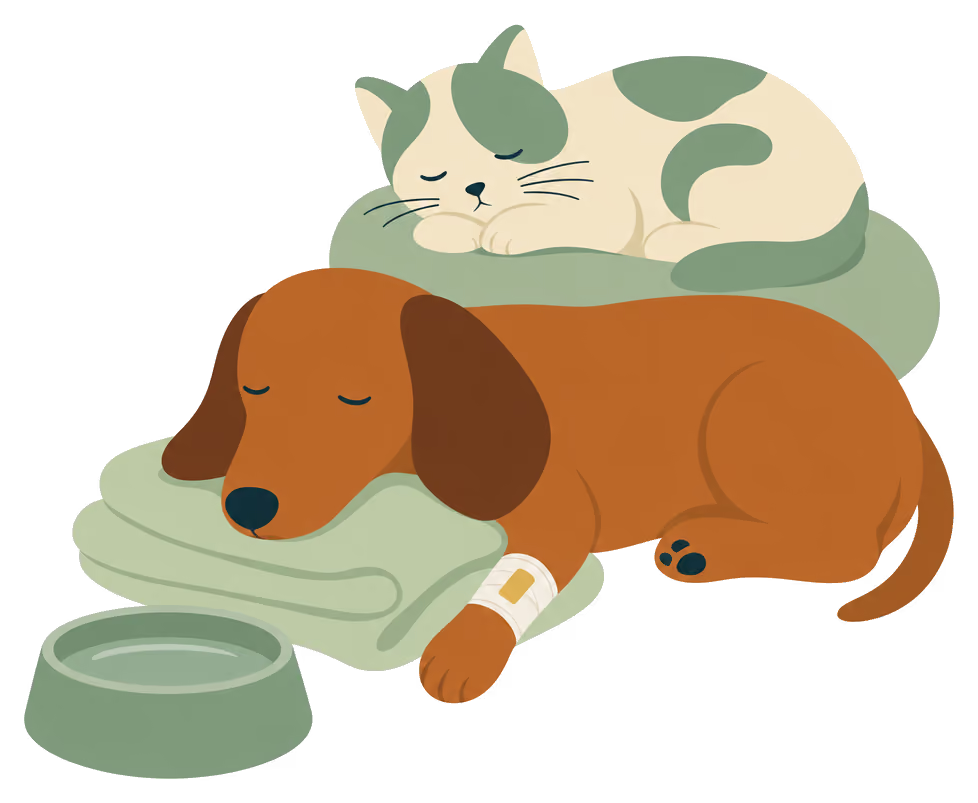
Whining that will not stop is the after-effect owners phone about most, and the hardest to read. A dog who quietens for a minute when you sit with him and then starts again could be feeling the drugs, feeling pain, or simply needing to urinate, and from across the room the three look the same.
If something looks wrong tonight, skip to when to call the clinic.
The common after-effects follow below in roughly the order they appear, with a clear line at the end between what usually settles on its own and what does not. It is general information. If your clinic has told you something different for your pet, their advice is the one to follow.
How long the effects usually last
Most dogs and cats are noticeably sleepy for the rest of the day and much brighter by the next morning. Many clinics describe the main effects as wearing off within about 24 hours, with some tiredness lasting a day or two longer, but there is no single number. The reason is that a modern anesthetic is a combination of drugs, each with its own timeline, as how anesthesia works describes.
Several things change the picture. A longer procedure usually means a longer recovery. Older pets, and animals with liver or kidney disease, can clear drugs more slowly. Very small or thin animals lose heat faster and may stay sluggish until they are fully warm. And the pain relief sent home, which you should keep giving on schedule, can itself make a pet drowsy for days. A pet that gets a little brighter each time you look in is on the right track.
Grogginess and sleeping it off
The first evening is mostly sleep. Pets may doze with their eyes half open, startle at small noises, or seem not quite to recognize the house. Let them rest in a quiet, warm spot on the floor (setting one up is covered under recovery at home), and resist the urge to keep checking by waking them up.
Some pets sleep with their tongue slightly out, snore more than usual, or twitch and paddle their legs in their sleep. None of that is unusual on the first night. What you want to see is steady, even breathing, gums that are pink when you lift the lip, and an animal that lifts its head and looks at you when you say its name. Cats often prefer to sleep curled tight at the back of a crate or carrier, and pulling them out to check is rarely worth the stress it causes.
Most of the first night’s strangeness is the drugs leaving the body, and it fades over hours rather than days.
Whining, crying and restlessness
This is the hardest one to read, because three different things can look exactly the same from across the room.
The first is dysphoria: a confused, uncomfortable state some animals pass through as anesthetic and sedative drugs wear off. A dysphoric dog may whine, pant, pace or seem unable to settle, and often does not respond much to comfort or attention. It usually fades over a few hours. Certain opioids used for pain relief are linked with it in some animals, and cats on opioids can look restless and wide-eyed rather than sleepy.
The second is pain. A dog in pain may whine when it moves, guard its belly, pant at rest, or lie in a stiff, hunched position. Cats in pain more often go quiet, hunch and stop grooming. Vets score it with tools such as the Glasgow Composite Measure Pain Scale and the Feline Grimace Scale, and signs of pain in dogs and cats shows what they look for.
The third is the simplest and the one most often missed: a full bladder. Many pets get intravenous fluids during surgery and come home needing to urinate badly, but they are too wobbly or too unsure in a cone to ask. Before deciding the crying is pain or drugs, take a dog out on a leash or offer a cat its tray.
If the whining continues for hours, does not settle after a toilet trip, and the next dose of pain relief is not due, phone the clinic. They can tell from the procedure and the drugs used which explanation is more likely, and whether to bring the animal back in.
Wobbly walking
A drunken, swaying walk on the first evening is very common. Sedatives and leftover anesthetic affect balance and coordination, and the back legs are usually the last to catch up. Keep your pet off stairs and slippery floors, carry small dogs where you can, and use a towel as a sling under the belly of a larger dog if needed, keeping it clear of the wound. Wobbliness that has not improved by the next day is a reason to call.
A hoarse bark or a cough
During general anesthesia most dogs and cats breathe through an endotracheal tube placed in the windpipe. It protects the airway and delivers oxygen and anesthetic gas, and it can leave the throat a little irritated. The result is a husky bark, a quieter meow, or a soft cough for a few days. It normally fades within that time. A cough that gets worse, comes with fast breathing or fever, or brings up phlegm needs to be seen.
Appetite, digestion and constipation
Plenty of pets show no interest in food on the first evening, and some vomit once after eating. Offer small portions and follow the clinic’s guidance on when and what to feed. Appetite usually returns over the next day. A pet still refusing food a day or two after coming home should be mentioned to the clinic, and a cat sooner rather than later, because cats cope badly with going without food.
Constipation in the first days after surgery is common and often not a sign of anything wrong. The pet fasted before the procedure, ate little afterwards, and may be on pain relief that slows the gut. Many pets pass no feces for a day or two. Straining repeatedly without result, a swollen or painful belly, or nothing at all after several days are reasons to call.
Temperature and shivering
Anesthesia lowers body temperature, and many pets come home slightly cool even after the clinic has warmed them. Shivering on the first evening is often just that. A warm, draft-free room and a blanket the animal can move off if it gets too hot are usually enough. Avoid heat pads directly against a sleepy pet, since an animal that cannot move away easily can be burned.
If you have a pet thermometer and know how to use it, normal body temperature in dogs and cats is roughly 100.5 to 102.5 °F (about 38 to 39.2 °C). A reading that stays clearly below or above that range is worth a phone call.
When to call the clinic
| Usually settles on its own | Call the clinic |
|---|---|
| Sleepy for a day with pink gums, brighter the next morning | Getting drowsier, cannot be roused, or pale, gray or blue gums |
| Whining that eases after a toilet trip or the next dose of pain relief | Crying for hours with no relief |
| Wobbly back legs on the first evening | Still unable to stand or walk the next day |
| Husky bark or soft cough for a few days | Labored, noisy or fast breathing at rest |
| Small appetite, one episode of vomiting | Repeated vomiting, or vomiting with blood |
| No feces for a day or two | No urine within about a day, or straining without result |
Before you pick up the phone
If you phone the clinic at nine at night about a whining dog, the team will almost certainly ask when the last dose of pain relief was given and whether the dog has urinated since coming home. Having both answers ready makes the call shorter and the advice more precise.
Frequently asked questions
Can anesthesia change my pet's personality?
Owners sometimes notice a pet that is clingy, grumpy or easily startled for a few days after a procedure. That is usually a mix of leftover drugs, pain, disrupted sleep and the strangeness of a cone. It tends to fade within days. A lasting change in behavior, or confusion that gets worse, is worth raising with the clinic, particularly in older animals.
Why are my cat's pupils so big after surgery?
Some drugs used for sedation and pain relief in cats, opioids in particular, commonly cause wide pupils, and the cat may seem alert, restless or a little odd for several hours. Bright light can bother them, so a dim room helps. If the pupils stay very large the next day, or are different sizes, call the clinic.
Read about pain managementWhy is there a shaved patch on my pet's front leg?
That is usually where the intravenous catheter sat during the procedure, giving the team a ready line for fluids and drugs. Some pets come home with a small bandage there, which the clinic will say when to remove, since one left on too long can cut off circulation to the paw. A little bruising is common. Swelling of the paw below the patch is a reason to call.
Read how anesthesia works, step by stepIs it all right to leave my pet alone on the first evening home?
If it can be arranged, having someone at home for the first evening and night is the better choice, because that is when wobbliness, vomiting or a problem with the wound is most likely to show. If a short absence cannot be avoided, leave the pet in a small, warm, safe room with no stairs or furniture to jump from, water within reach, and the cone on if one was supplied.
Read about recovery at homeSources and further reading
Explore the original publications behind this guide.
Keep reading
Recovery at home
How to set up a safe floor-level room, keep a medication sheet on the fridge, and spot the signs that need a call tonight.
How anesthesia works
What the premed, the induction drug, the tube, the vaporizer and a nerve block each do, and which step owners can influence.
Signs of pain
Posture, face, appetite and grooming changes set side by side, the Glasgow and grimace scales, and the signs that cannot wait.