Surgery and recovery for dogs and cats, day by day from drop-off
Most of the work of a good recovery happens at home, after the clinic has done its part. These guides follow the order things actually happen, from the morning of surgery to the stitch check.
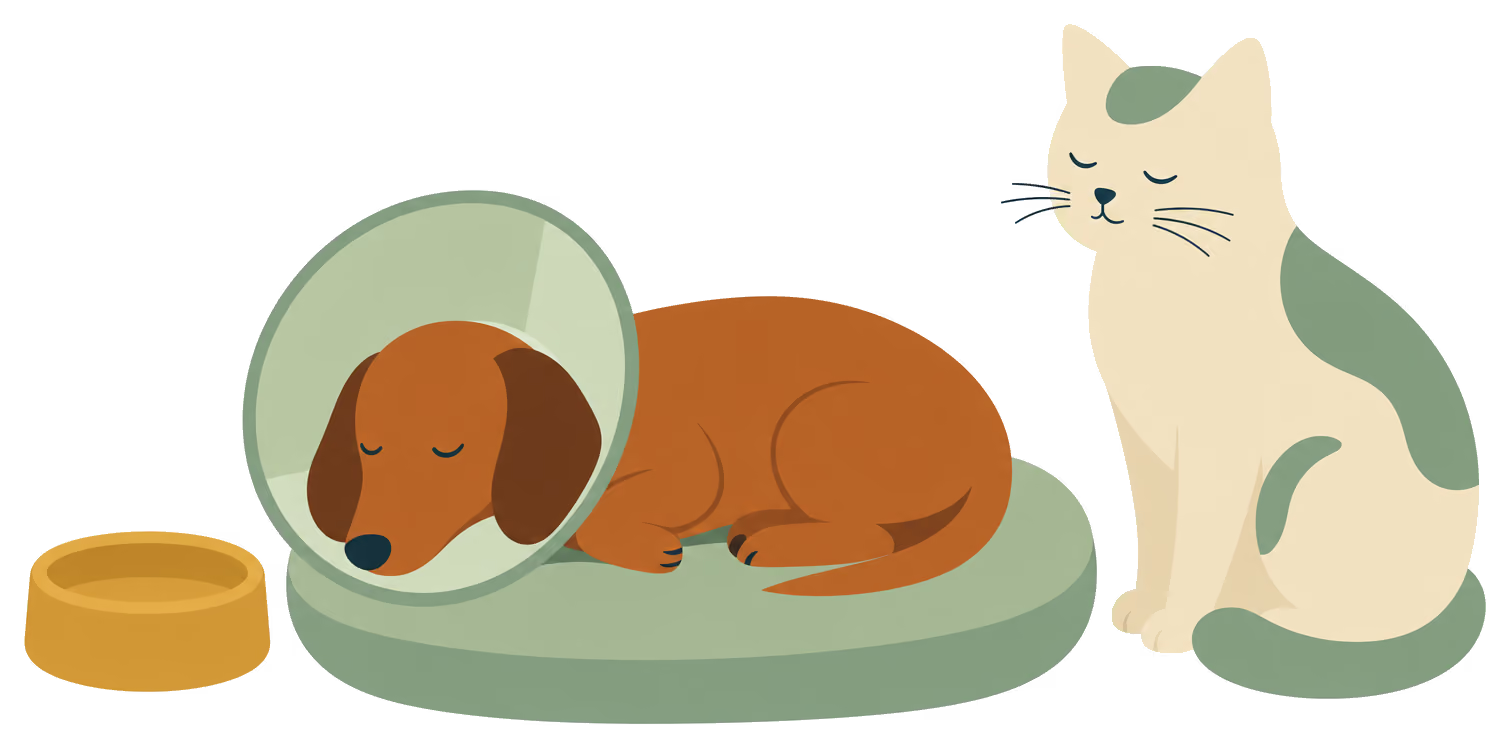
From pick-up to stitches out.
Four guides for the days after surgery, in the order most owners need them.
The hours after anesthesia
How long grogginess, a croaky bark and wobbly back legs usually last, and the table that separates them from a real problem.

Recovery at home
How to set up a safe floor-level room, keep a medication sheet on the fridge, and spot the signs that need a call tonight.
Caring for the wound
Cone or recovery suit, stitches or glue, and a daily photo habit that shows the clinic which way a wound is going.
Spay and neuter
Midline or flank, ovaries only or uterus too, and why the right age for a large dog is now judged case by case.
Most of a surgery day, for the owner, is waiting. The call that ends it usually comes around mid-afternoon: the surgery went well, the dog is awake, pick-up is any time after four. The guides in this section are written for the hours after that call.
This page is the timeline: the morning of surgery, the procedure, the conversation before you leave, the first night, and the two weeks that follow. The detail for each stage sits in its own guide, linked where the stage begins. Every clinic runs things a little differently, and the discharge sheet you are handed always comes first.
The morning of surgery
Many clinics ask for drop-off early in the morning, often before nine. The pet will usually have been fasted according to the clinic’s own instructions, and the reasoning behind those instructions is set out in the page on fasting before surgery. At admission a nurse or technician confirms the procedure, the contact number for the day, and any medications the animal has had that morning. This is the moment to mention anything that has changed since booking: a cough, a missed meal, a new supplement.
A physical examination and, often, blood work follow, as part of the pre-anesthetic check that helps the team plan the anesthetic. Then the animal goes into a kennel, usually gets a premedication injection to calm them and reduce pain, and waits for their slot.
You now have a few empty hours. They are the best time to set up the recovery room at home, before a groggy animal is in the car and you are juggling a carrier, a cone and a paper bag of medicines.
During the procedure
The surgery time is rarely fixed. Emergencies arrive, a dental takes longer than expected, an earlier patient needs extra attention. While your pet is under anesthesia a dedicated person watches breathing, heart rate, blood pressure and oxygen levels until the last stitch is in. After the procedure the animal is moved to a recovery area, kept warm, and watched until they can hold their head up and swallow normally.
This is also when most clinics phone the owner.
The discharge conversation
The pick-up appointment is short, often ten minutes, and it carries more information than any other part of the day. A nurse or the vet will usually go through what was done, how the anesthetic went, which medications are being sent home and when the next dose is due, what the wound should look like, how much activity is allowed, and when the recheck is booked. Then you get a written sheet that repeats most of it.
Keep that sheet, and read it before you leave the parking lot rather than at 11 pm when something looks odd. If a medication time is unclear, or the sheet says “restricted exercise” without saying what that means for a dog who lives up two flights of stairs, ask while the person who knows the case is still standing in front of you. Owners who write down the time of the last pain relief dose given at the clinic tend to have a much calmer evening.
The first evening and night
The first evening is mostly rest. Pets often come home sleepy, wobbly, a little hoarse or unusually vocal, and many have no interest in food until the next day. Which of those after-effects are expected, and how long each tends to last, is the subject of what is normal after anesthesia. The practical side (the room, the feeding plan, toilet trips on a leash and a medication chart on the fridge) belongs to recovery at home.
What matters on this page is the rhythm. Look in every hour or two without waking the animal each time, give the evening dose of pain relief when it is due, and go to bed with the clinic’s out-of-hours number saved in your phone under the pet’s name.
Days two to five
The second morning usually brings a brighter animal, a returning appetite and the first real look at the incision in daylight. From here the focus shifts from the anesthetic to the wound and to restraint.
This is also the stretch where pets start to feel better than they are. Around day three or four the itching begins, the cone becomes a puzzle to be solved, and a dog who could barely manage the back step on day one is now looking at the sofa. Pain relief, if prescribed, is still given on schedule rather than only when the pet seems sore, and the reasons are laid out in pain management for dogs and cats.
The rest of the two weeks
Most routine soft-tissue wounds need roughly ten to fourteen days to heal enough for normal activity. For most of that time the animal will feel much better than the wound actually is, and that gap is where problems happen: the jump off the bed on day six, the cone that came off overnight on day eight. What a healing incision should look like each day, and how to choose between a cone and a recovery suit, is in the wound care guide.
Spays and neuters make up a large share of routine surgery, and they have a few points of their own, from the scrotal swelling some males get to the question of when an outdoor cat can go back out. Those are collected in the spay and neuter guide.
When to call the clinic
Call the clinic, or the emergency service named on the discharge sheet, for labored or noisy breathing, pale or gray gums, a wound that bleeds steadily or has opened, repeated vomiting, a pet you cannot rouse, or no urine within about a day of coming home. Clinics would much rather take a call that turns out to be nothing.
The recheck
The recheck usually falls somewhere between day ten and day fourteen, and it is short. The vet looks at the wound, removes skin stitches if there are any, and tells you which restrictions can lift and which should stay a little longer.
Bring the discharge sheet with the medication times ticked off, and any photos of the wound taken along the way. If the sheet still has a question written in the margin from the first night, ask it now.
Frequently asked questions
Can I stay with my pet during the surgery?
Almost never in the operating room itself. Clinics keep that space for the surgical team for reasons of sterility, safety and concentration. Many will let you stay with your pet during the admission check, and some will let you sit with a nervous animal while a pre-anesthetic sedative takes effect. Ask when you book, since the answer depends on the building and the staff available that day.
Why does the clinic want my pet so early when the surgery is later?
Clinics schedule a whole day of procedures and do the admission checks, blood tests and sedation in batches. An early drop-off gives the team time to examine your pet, settle them in a kennel and let any premedication work fully. The exact surgery time often depends on how the earlier cases go, which is why a precise slot is rarely promised.
Read how anesthesia works, step by stepIs it normal for the clinic to keep my pet overnight?
For routine procedures most pets go home the same day. Overnight stays are common after longer or more invasive surgery, when intravenous fluids or injectable pain relief are still needed, or when the animal recovered slowly from anesthesia. Some clinics do not staff the building overnight, so it is fair to ask who will be checking on your pet and how often.
Read about the first hours after anesthesiaWhat should I bring to the pick-up?
A secure carrier for a cat, a short leash and a non-slip mat or blanket for the car for a dog, and a towel in case of an accident on the way home. Bring a pen too, or use your phone, so you can note the times of the next medication doses during the discharge conversation.
Read about recovery at homeSources and further reading
Explore the original publications behind this guide.
Keep reading
Recovery at home
How to set up a safe floor-level room, keep a medication sheet on the fridge, and spot the signs that need a call tonight.
Caring for the wound
Cone or recovery suit, stitches or glue, and a daily photo habit that shows the clinic which way a wound is going.
Managing pain
Pre-emptive and multimodal pain relief, nerve blocks, the main drug classes without doses, and four questions to ask at discharge.