Pain management for dogs and cats: before, during and after surgery
Good pain control starts before the first incision and carries on at home for days afterwards. Cats get a plan of their own, because their bodies handle many common drugs very differently.
Updated
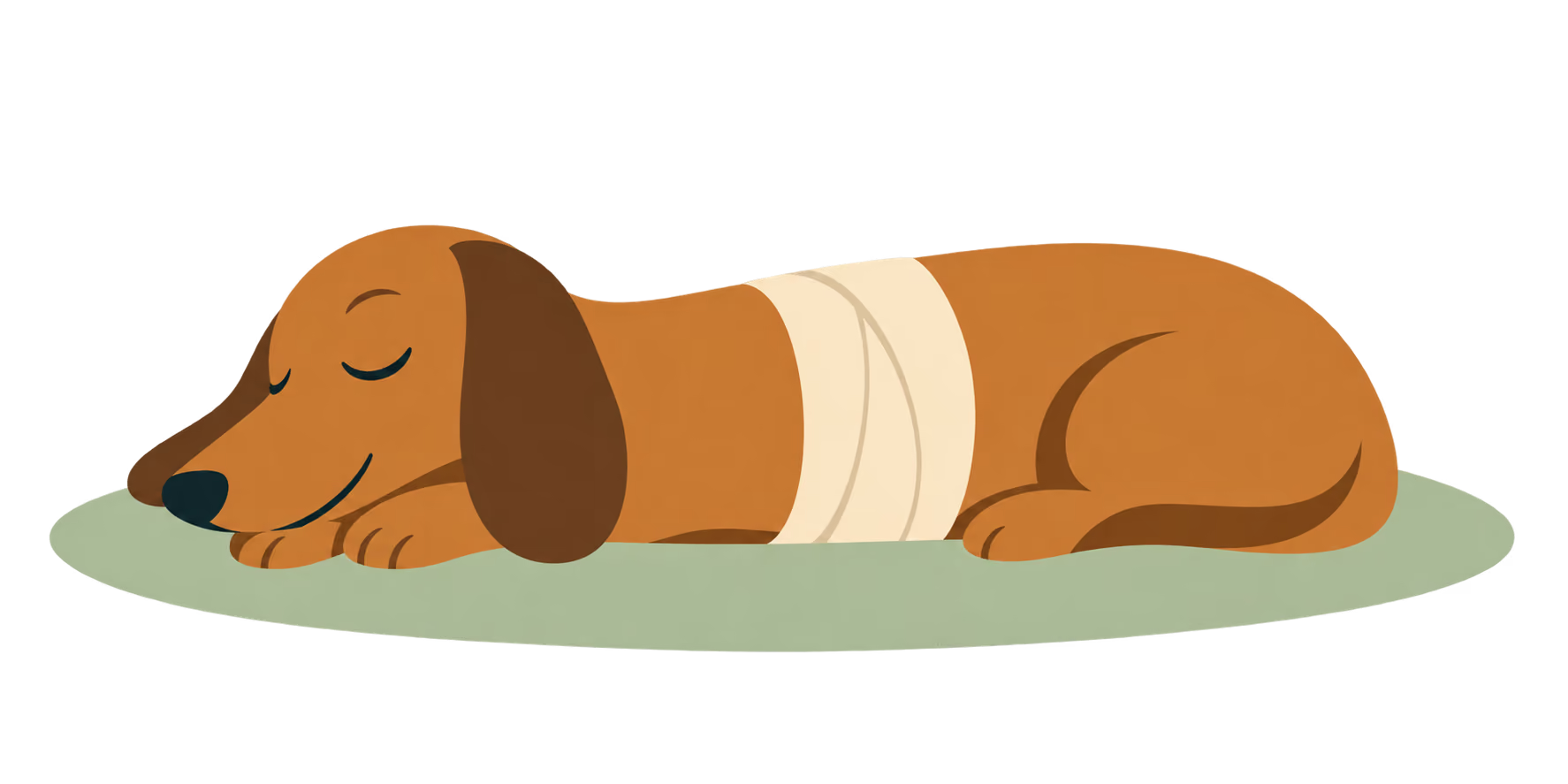
Much of the pain management for dogs and cats after surgery is decided before surgery starts, in the injection given that morning and in the numbing drugs placed before the first incision. Pain management for cats follows the same order with different drugs, because a cat’s liver handles many common medicines badly. The rest of the plan travels home in a small paper bag: the pain medication for dogs after surgery is usually two boxes and a printed sheet with times on it, and for cats often a small bottle of liquid.
What remains is the evening question. A dog that came home at four with a line of stitches along the belly may be lying on the kitchen floor at ten, not quite settled, licking at the air, and it is hard to tell whether that is pain, leftover anesthetic or just a strange day. The answer lies in what the household notices over the next few days.
Pain management for dogs starts before the first cut
Modern veterinary pain control rests on two ideas that came into everyday practice over the last few decades. The first is called pre-emptive analgesia: giving pain relief before the painful event rather than waiting for the animal to wake up hurting. Once a strong pain signal has been running for a while, the spinal cord and brain become more sensitive to it, a process often described as wind-up or central sensitization, and that heightened state is much harder to switch off than it would have been to prevent. So the premedication a dog or cat receives in the morning, before anesthesia, usually contains something for pain as well as something to calm.
The second idea is multimodal analgesia. Pain travels along a chain: the injured tissue, the nerve carrying the signal, the spinal cord, the brain that interprets it. Different drug classes act on different links of that chain, and combining two or three of them usually works better than a large amount of one, with fewer side effects from each. The WSAVA Global Pain Council guidelines, first published in 2014 and updated in 2022, and the 2020 AAHA Anesthesia and Monitoring Guidelines for Dogs and Cats both describe this layered approach as the standard to aim for.
In practice that means a well-run pain plan for a spay might combine a premedication with an opioid, a local anesthetic around the surgical site, an anti-inflammatory once the team is satisfied with blood pressure and kidney function, and a few days of medicine at home. None of those pieces is exotic, and good pain management for dogs rarely depends on anything a general practice does not already stock.
Local blocks: numbing the nerves that carry the message
Local anesthetics are some of the oldest drugs in veterinary medicine and still among the most useful. They stop a nerve from passing on a signal at all, so the brain never receives it. Lidocaine and bupivacaine are the two names an owner is most likely to see on a record.
They can be used in many ways. A dental nerve block numbs one side of the jaw before teeth are extracted. A testicular block is common during castration. Local anesthetic can be dripped onto or infused along an incision, injected around the nerves of a leg before orthopedic surgery, or given as an epidural near the base of the spine for surgery on the hind legs or the abdomen. Some clinics use ultrasound or a nerve stimulator to find the right nerve precisely.
The appeal is obvious. A patient whose pain pathway is blocked at the source needs less general anesthetic to stay asleep, which tends to make breathing and blood pressure steadier on the monitors (the anesthesia monitoring guide explains what the team is watching). When a clinic offers a nerve block for a dental or orthopedic procedure, it is worth accepting.
Pain medication by class, named without doses
Owners are often handed medicines with unfamiliar names.
Pain is far easier to prevent than to chase, so the best plans start before the first cut and keep going on a schedule at home. The table below sorts the main approaches by what they do, not by brand, and it says nothing about amounts: doses depend on the species, the animal’s weight, its organs and the other drugs in the plan, and only the prescribing veterinarian can set them.
| Approach | What it does | When it is typically used |
|---|---|---|
| Local anesthetic blocks | Stop nerves from passing on the pain signal from one area | Dental extractions, castration, limb surgery, epidurals, incision lines |
| NSAIDs (non-steroidal anti-inflammatories) | Reduce inflammation and the pain that comes with it | After most surgeries once blood pressure and kidney function allow, often continued at home for several days |
| Opioids | Act on the brain and spinal cord to dampen how pain is felt | Premedication, during and after moderate to severe surgery, in hospital and sometimes at home |
| Alpha-2 agonists | Sedate and add pain relief | Premedication, calming a difficult recovery, short procedures |
| Ketamine at low infusion rates | Reduces the sensitized state of the spinal cord | Major surgery, trauma, patients already in pain before surgery |
| Gabapentin and similar drugs | Calm overactive nerve signaling | Some post-surgical plans, nerve-related and long-lasting pain, sometimes to reduce stress in cats |
| Cold, rest, padding and quiet | Ease swelling and make the animal physically comfortable | Every recovery, alongside medicine, as the clinic advises |
Two points about that table are worth a little more space. NSAIDs are effective and widely used in dogs, but they can harm the stomach, kidneys and occasionally the liver, which is why clinics often run blood tests first and why two of them, or an NSAID plus a steroid, must never be combined unless the veterinarian specifically plans it. Opioids are the strongest tool for acute pain, and in some countries their use at home is limited by controlled-drug rules, so a dog may go home on an NSAID alone while the opioid part of the plan stayed in the hospital.
Pain management for cats: why their plan is different
Cats are not small dogs, and pain management for cats has to start from that fact. A cat’s liver is poor at one of the main chemical routes the body uses to break down drugs, a process called glucuronidation. Medicines that rely on that route linger far longer in a cat, or build up into harmful products. This is the main reason several drugs that are routine in dogs, or in people, are dangerous or need very different handling in cats.
Some NSAIDs are licensed for cats, at cat-specific doses and often for shorter courses, and they are used carefully because older cats so often have early kidney disease. A dog’s NSAID tablet is not a cat’s medicine. Opioids work well in cats, and one of them can be absorbed through the lining of the mouth, which spares the owner from pilling a sore cat; clinics often send it home as a liquid for that reason. Cats on opioids may have very wide pupils and can be briefly restless or unusually affectionate, which owners sometimes mistake for pain.
Good pain management for cats therefore leans on drugs and doses chosen for the feline liver, and on a careful look at the cat itself. The harder problem is recognizing the pain in the first place. Cats hide it well. A cat in real discomfort may simply sit very still at the back of a carrier or under a bed, and a quiet cat is easy to read as a contented one. The Feline Grimace Scale, published in 2019, gave veterinary teams a way to score pain from the face alone, and it is one of the reasons feline pain is now treated more seriously than it once was.
Human pain relievers can be dangerous
Common human pain relievers such as ibuprofen, naproxen and acetaminophen (paracetamol) can poison dogs, and acetaminophen in particular can kill a cat even in small amounts, because of the very liver pathway described above.
Ibuprofen and naproxen can cause stomach ulcers and kidney damage in dogs at amounts that would be harmless to a person. Aspirin is sometimes mentioned in older pet books, but it also carries risks, stays in a cat’s body for a long time, and makes the prescribed anti-inflammatory dangerous if the two are combined. None of these belongs in the home pain plan unless a veterinarian has said so for that animal. If a pet has already swallowed one, phone the clinic or an animal poison helpline at once, with the packet ready to read out.
The home pain plan after surgery
The discharge conversation is where the plan for the next few days is handed over, and it moves fast. It helps to ask four questions before leaving: what each medicine is for, what time the next dose is due, how long the course runs, and what side effects would justify a phone call. The room, the bed and the toilet trips of that first week belong to recovery at home.
Pain management for dogs at home is mostly a matter of timing, and pain medication for dogs after surgery works best on the clock. Most plans are given on a schedule rather than when the pet seems sore, because a dose given after pain has built up has to work harder. Writing the times on the fridge, or setting phone alarms, avoids the common evening confusion over whether the second tablet was given. NSAIDs are usually given with food. If a dose is vomited, or the pet refuses its meal, call the clinic for advice rather than simply giving another.
Expect the first night to be the hardest. Sedation and pain relief from the hospital are wearing off, the house smells different after the clinic, and some animals whine or pant for an hour or two before settling. That is common, and it usually eases once the evening dose has had time to work.
Comfort matters as much as medicine. A quiet room away from other pets and children, a soft but firm bed at floor level, rugs or yoga mats on slippery floors, and short, calm toilet trips on a leash all lower the background discomfort. A cold pack wrapped in a cloth can ease swelling in the first day or two if the clinic recommends it. Cats usually want a low-sided litter tray, a hiding place they can reach without jumping, and to be left alone more than people expect. A cone that is too long, or that the animal cannot eat or drink in, causes more distress than many owners realize; a soft collar or a recovery suit is often a fair swap if the clinic agrees.
When to call the clinic about pain after surgery
Pain that is building, not easing, is the main thing to watch for; what it looks like in each species is set out in signs of pain in dogs and cats. Call the same day for:
- pain that is worse after the first day instead of better, or crying when the wound area is touched
- refusing all food beyond the first day, repeated vomiting, or black, tarry stool on an NSAID
- a wound that is hot, swollen or leaking (normal healing is shown under wound care)
When pain does not end with the wound
Surgical pain should fade steadily over days. Chronic pain is a different problem: arthritis in an older dog, a cat that stopped using the high shelf years ago, a back that never quite recovered. It is treated with longer-term plans that often combine weight control, exercise and physiotherapy, long-term medicines monitored with blood tests, and, in recent years, monthly antibody injections approved for osteoarthritis pain in dogs and in cats. That subject deserves its own space, and caring for senior pets is a good place to start.
For the first evening home, put the medicine boxes and the discharge sheet in the same spot as the leash or the carrier, so that if the clinic’s emergency line asks what was given and when, the answer is in your hand within ten seconds.
Frequently asked questions
Will my dog be sent home with pain medication after a routine spay or neuter?
Most clinics send home a few days of an anti-inflammatory for dogs after routine neutering, and some add a second medicine. The exact plan depends on the procedure, the dog's age and health, and the clinic's own protocol. If you are not told what is being sent home, ask at discharge, and ask what time the next dose is due.
Read about spay and neuter recoveryCan pain medication make my pet sleepy or wobbly?
Yes. Opioids, sedatives and some other pain medicines can cause drowsiness, a slightly unsteady walk, or in cats dilated pupils and a restless spell. These effects usually ease as the dose wears off. If your pet cannot stand, seems distressed, is breathing oddly or cannot be woken properly, phone the clinic straight away rather than waiting for the next dose.
Read about the first hours after anesthesiaShould I stop the medicine once my pet seems fine?
Not without checking with the clinic. A pet that looks comfortable on day two may be comfortable because the medicine is working. Stopping early can let pain return, and some medicines are meant to be given for a full course. If you think the medicine is no longer needed, or you see side effects, call and ask before changing anything.
Read about the signs of painIs it safe to give my pet an anti-inflammatory left over from a previous illness?
Only if the veterinary team says so for this particular situation. Leftover anti-inflammatories can be dangerous when combined with the medicines just prescribed, when the dose or species is different, or when kidney or stomach problems have appeared since. A medicine prescribed for one dog should never be given to another dog, and never to a cat.
Sources and further reading
Explore the original publications behind this guide.
Keep reading
Signs of pain
Posture, face, appetite and grooming changes set side by side, the Glasgow and grimace scales, and the signs that cannot wait.
Recovery at home
How to set up a safe floor-level room, keep a medication sheet on the fridge, and spot the signs that need a call tonight.
Monitoring every vital sign
ECG, pulse oximetry, CO2, blood pressure and temperature, the depth signs no machine shows, and what the paper record catches.